
Primary SCHOOL
The English Primary School is the only bilingual primary school in Modena accredited by Cambridge International
Booka a visitGrowing up to be independent, curious and self-aware
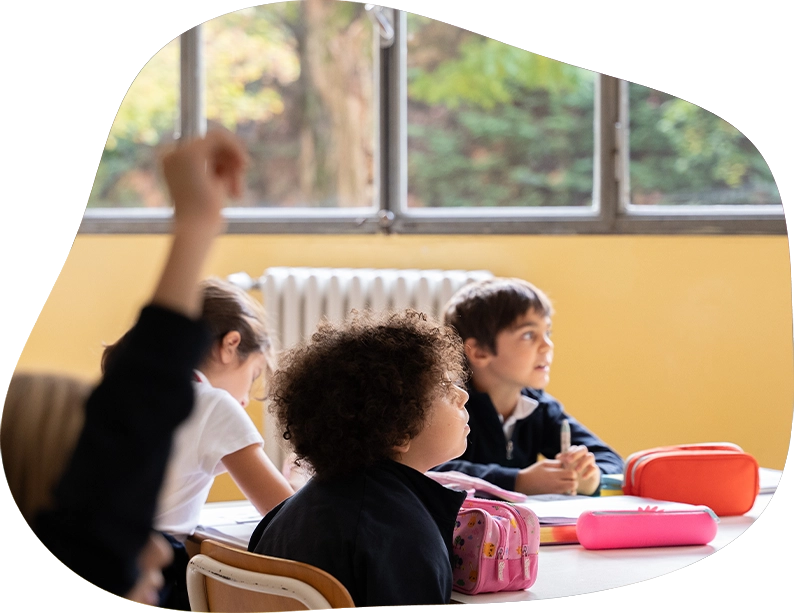
In Primary, children learn about the world whilst becoming increasingly independent, curious and aware. Complexities become opportunities for exploration, and challenges are approached as adventures to be understood and resolved, step by step.
School becomes a place where we ask questions, make connections and grow together: with small class sizes, every child is welcomed and supported on their cognitive, emotional and social journey.
The educational model
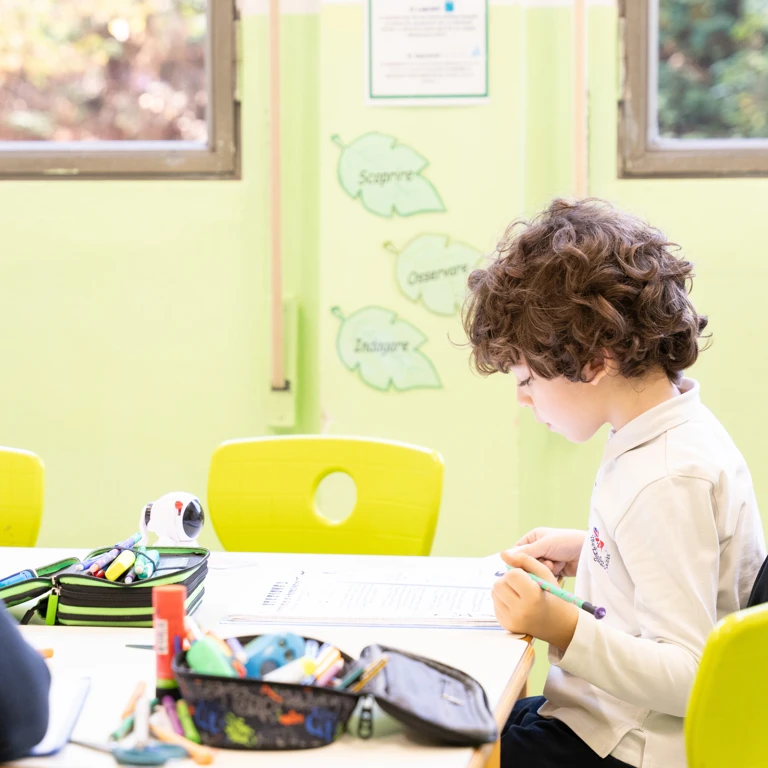
Our model combines active learning and an interdisciplinary approach. Pupils play an active part in class life: they collaborate, experiment and explore through lessons, workshops, STEAM activities, educational robotics and research projects.
Curiosity is the driving force. The desire to explore, learn and ask questions lays solid foundations for lifelong learning.
Responsibility and independence are developed through specific roles: pupils act as Helpers and Eco Helpers, looking after the communal areas and developing an awareness of sustainability in their day-to-day lives.
School life fosters collaboration and team spirit through the Houses system (Mars, Jupiter and Saturn), which involves pupils in projects, challenges and shared activities.
The transition between the different school levels takes place gradually and with support, ensuring stability and peace of mind throughout the child’s development.
- Active learning: practical and meaningful experiences
- Interdisciplinary programmes: STEAM, robotics, research projects
- Shared responsibility: active roles and the Houses system
- Educational continuity: gradual, supported transitions
The Curriculum
The curriculum combines the National Guidelines with the Cambridge International programme, offering a comprehensive and recognised bilingual education. Knowledge grows over time, deepens and is transformed into real skills.
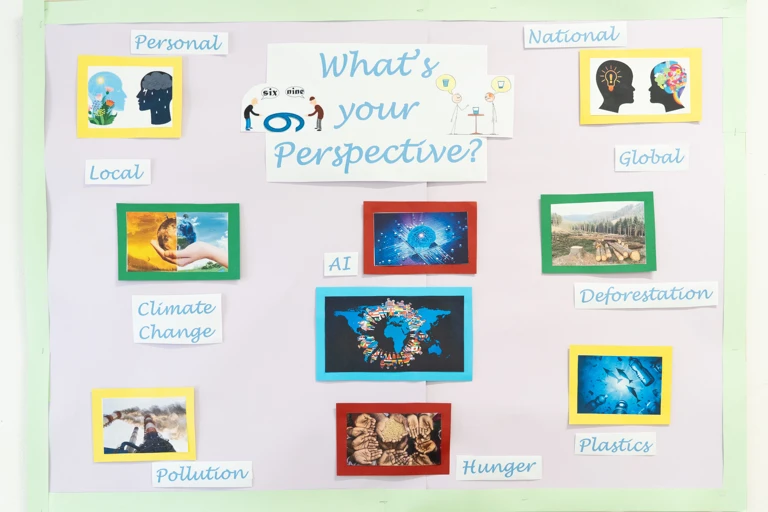
The Cambridge curriculum includes English as a Second Language and, in Years 4 and 5, Global Perspectives: a programme that develops critical thinking, research skills and the ability to analyse global issues from different perspectives.
Genuine, structured bilingualism
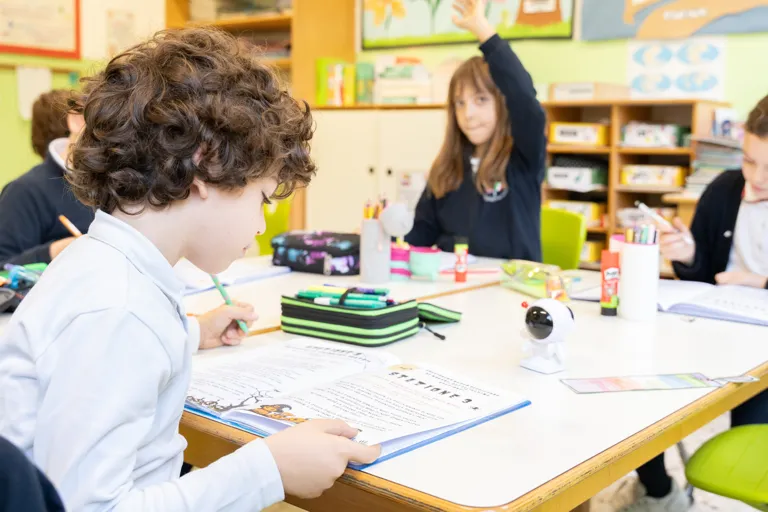
In Primary, bilingualism takes on a structured form. English becomes an everyday skill: pupils learn to read, write and communicate with increasing confidence.
Qualified native-speaking teachers guide students using an authentic and immersive approach. Language is a living tool: it is used to explore science, art, literature and subject-specific content in a natural and engaging way.
Respect for the structures of both languages ensures a competent and informed use of each.
Cambridge Certifications
Throughout the course, students sit the Cambridge qualifications, which are recognised internationally. Preparation is integrated into the curriculum: progressive courses tailored to age and level, with communicative materials incorporated into teaching.
- Starters – Year 2
- Movers – Year 3
- Flyers – Year 4
- A2 Key (KET) – Year 5
Outdoor education
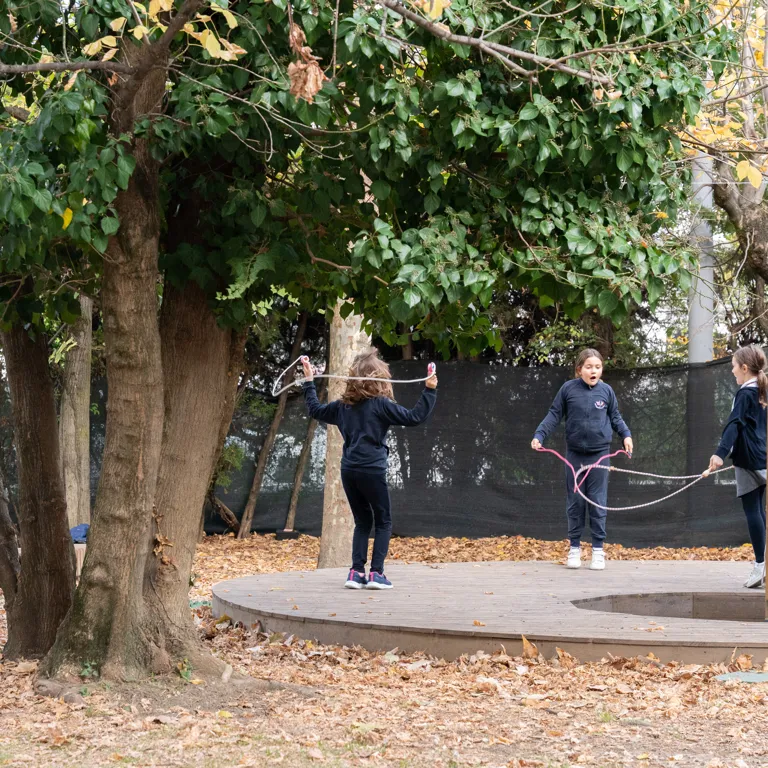
Outdoor spaces are an integral part of the educational experience. Children observe phenomena, collect data, explore the local area and link what they see to the topics covered in class.
The outdoor environment is a prime learning space.
- Outdoor scientific, mathematical and artistic activities
- Sustainability and environmental protection projects
- Exploring the surrounding area
Nutritional education
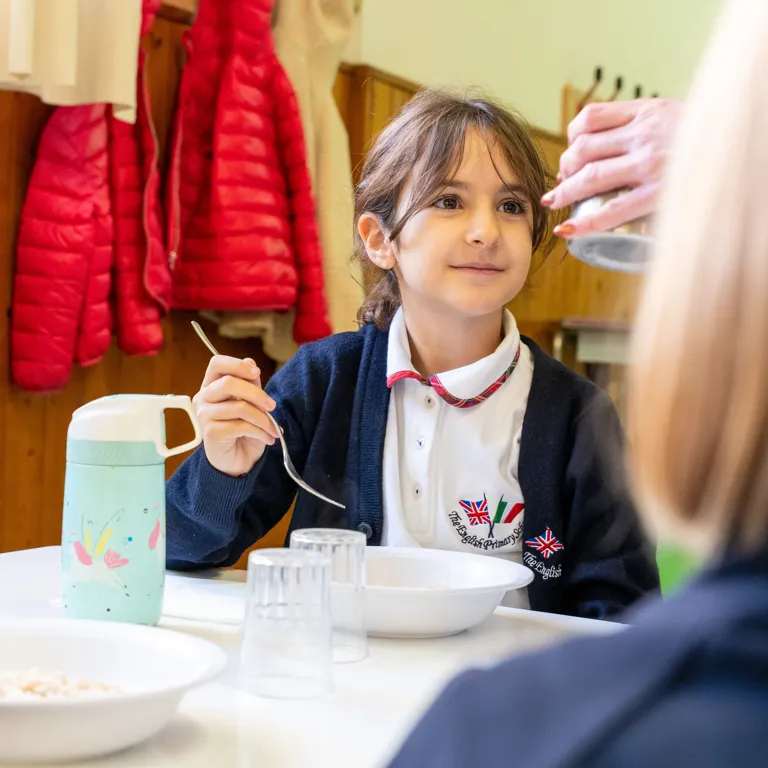
For us, lunchtime is an educational and social experience. We promote knowledge of healthy eating, food awareness and the reduction of food waste, actively involving children and their families.
Taste Club
A real source of pride for our school: the Taste Club is a group of parents involved in evaluating school meals by tasting them.
Becoming Education offers training on healthy eating to parents who wish to play an active role. We welcome them as partners in the children’s wellbeing.
Timetable and a typical day
The school day is structured around periods of independent work, group activities, workshops and outdoor experiences. These routines encourage independence and confidence, helping the children to navigate their day with ease.
| Timetable | Activities |
|---|---|
| 7:30 – 8:00 | Pre-school |
| 8:00 – 8:15 | Entrance |
| 8:15 – 8:30 | Preparatory activities for the lessons |
| 8:30 – 10:30 | Lessons and workshops |
| 10:30 – 11:00 | Break / interval |
| 11:00 – 13:00 | Lessons and workshops |
| 13:00 – 14:00 | Lunch and break/playtime |
| 14:00 – 14:15 | Preparatory activities for the lessons |
| 14:15 – 16:30 | Lessons and workshops |
| 16:30 – 18:30 | After School Clubs |
The educational community
The Becoming model views children, parents and teachers as part of the same educational community.
For us, education means building a genuine community made up of children, teachers and families. Ongoing dialogue, shared records, regular parent-teacher meetings and social events foster a relationship based on trust, participation and collaboration, for the wellbeing and development of every child.
Let’s enrich this journey with some special moments:
- International evenings
- Craft evenings with parents
- Events and opportunities to get together
We also promote projects that actively involve parents in school life, offering children the opportunity to share meaningful experiences with their families.

Frequently asked questions
Start your journey with us
Come and discover Peter Pan/EPS: book a visit or request information. We look forward to seeing you!