Curriculum
Explore, connect, grow.
The curriculum supports children aged 3 to 10 through a continuous, coherent and international educational programme, which integrates the Italian National Guidelines with the Cambridge International curriculum at Primary School.
At the heart of our project lies the development of genuine bilingualism and the skills needed to face the future with awareness, independence and a critical mindset.

Ensures a consistent educational pathway from the age of 3 to 10
Every experience contributes to linguistic, cognitive, emotional and relational development
Through an approach that emphasises experience, research, creativity and collaboration, students develop the 8 European key competences.
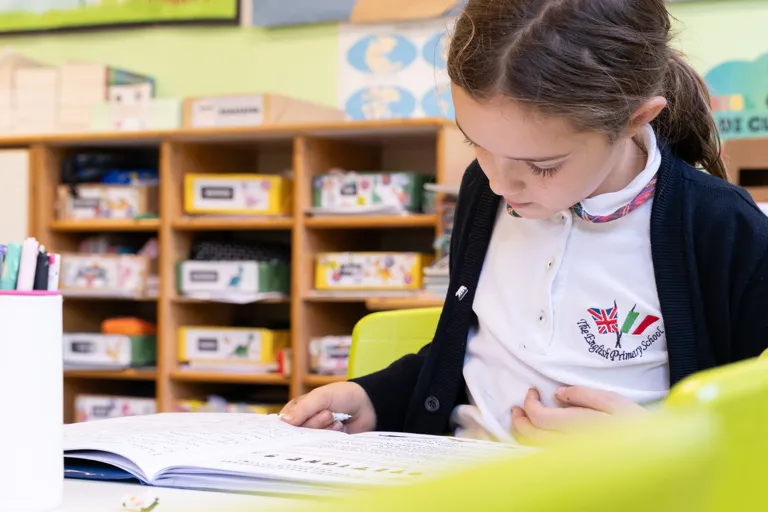
The 8 European key competences
- Communication in one’s mother tongue
- Language skills (foreign languages)
- Mathematical and scientific skills
- Digital skills
- Learning to learn (study method)
- Social and civic competences
- A sense of initiative and entrepreneurship (turning ideas into projects)
- Cultural awareness and expression
Preschool (Age 3–5)
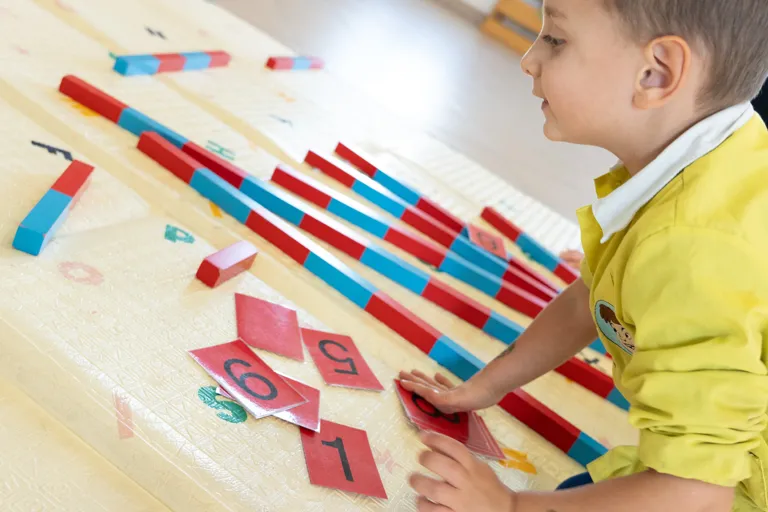
At Preschool, learning stems from children’s natural curiosity and develops through play, hands-on experience and social interaction.
The educational programmes aim to foster the development of independence through doing and thinking, in a collaborative and experiential way.
The days are organised around a programme centred on discovery, through workshops and engagement with materials designed to encourage problem-solving and to build skills and confidence in one’s own abilities.
Through creative, musical, expressive and scientific activities, children explore the world, develop their first STEAM skills and learn to work together with others.
Particular attention is paid to emotional and social development, outdoor education and exploring nature, so that every child can develop a sense of curiosity, well-being and a desire to learn.
Primary School
In Primary, the curriculum combines the National Guidelines with the Cambridge International programme, offering a comprehensive and recognised bilingual education.
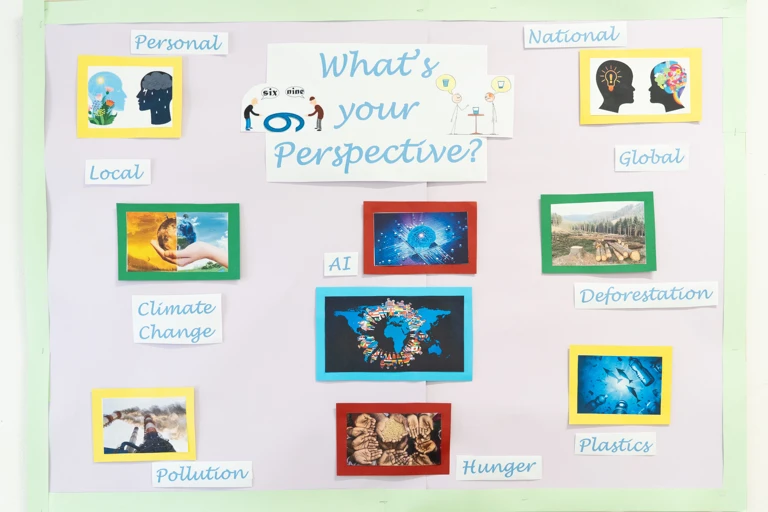
The Cambridge curriculum includes English as a Second Language and, in Years 4 and 5, Global Perspectives: a programme that develops critical thinking, research skills and the ability to analyse global issues from different perspectives.
We support students in becoming active participants in their own learning journey: knowledge grows over time, deepens and transforms into real-world skills.
Full-immersion English and Bilingualism
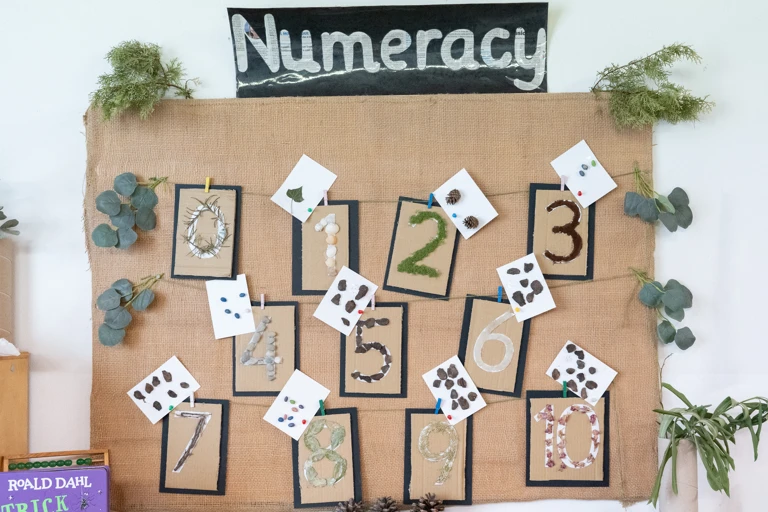
Full immersion at the Preschool
English is the language of everyday life from the age of 3.
Children acquire it spontaneously thanks to a full immersion environment: communication takes place through meaningful activities, routines and authentic interactions with teachers.
Structured bilingualism in Primary School
In Primary, English is taught by qualified native-speaking teachers and follows a programme aligned with the English National Curriculum and recognised by Cambridge International. Pupils spend 11 hours a week on subjects taught in English.
Learning in Italian and English takes place through constant dialogue: this ensures an understanding of how the different languages work and enables students to use each one competently and with awareness.
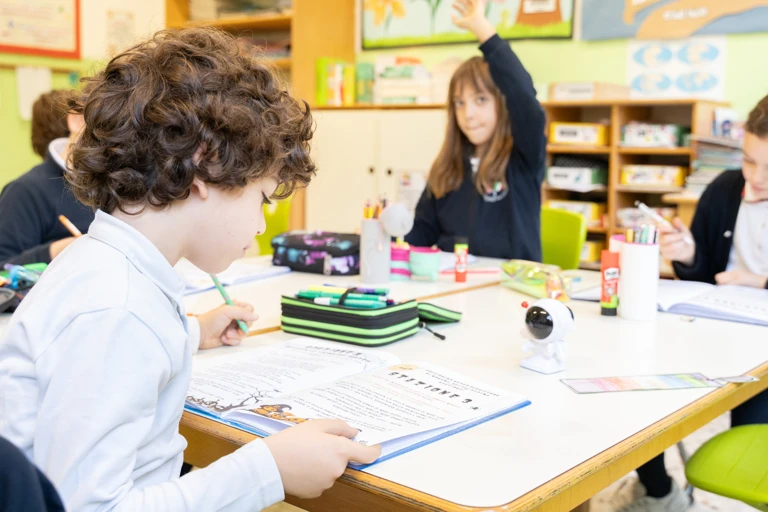
The English-language programme is organised by year:
- Year 1 and Year 2: the ‘Letters and Sounds’ programme – phonics, reading, writing and spelling. In English, there is also a focus on STEAM, coding, geography and art, in line with the Italian curriculum
- Year 3: Upper Primary curriculum – spelling, grammar, reading comprehension and writing, using a variety of narrative and informative texts
- Year 4 and Year 5: Cambridge Global Perspectives – research, collaboration, communication and critical thinking through the analysis of global issues from different perspectives
Cambridge Certifications
We prepare students to sit the Cambridge Young Learners qualifications: a progressive programme that develops communication skills and offers international recognition.
- Starters – Year 2
- Movers – Year 3
- Flyers – Year 4
- KET – Year 5, first step in the Cambridge English Qualifications
The programme is integrated into the curriculum: age-appropriate, progressive learning pathways; communicative materials integrated into teaching; and the development of confidence, independence and language proficiency.
STEAM: Science, Technology, Engineering, Art and Mathematics
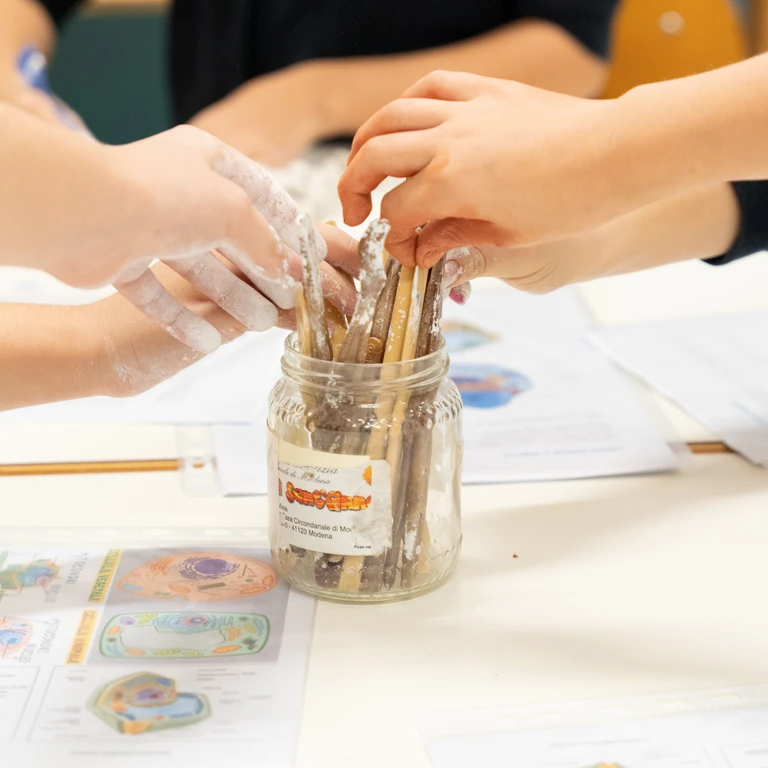
Through the STEAM programme, we integrate science, technology, design, art and mathematics. We foster observation, creativity, experimentation and design skills.
Pupils learn to observe, experiment, reason and create. Design thinking helps them to find solutions, imagine connections and collaborate.
- Scientific projects and research activities
- Technology, coding and robotics workshops
- Integrated artistic and design experiences
- Concrete, experience-based maths
Art, Music and Creativity
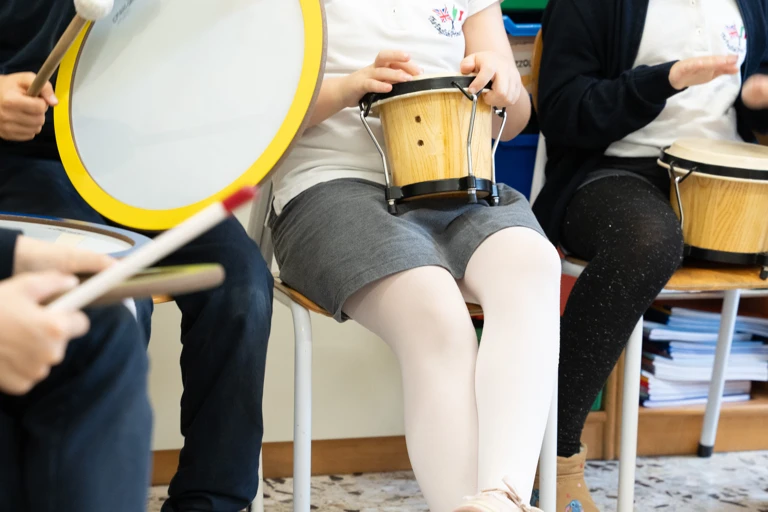
From Preschool onwards, art and music help children to discover themselves and the world around them. These are forms of expression that enable them to express themselves, use their imagination, experiment and create worlds.
The creative workshops foster creativity, concentration, listening skills and collaboration. Each age group takes part in activities designed to explore materials, sounds and shapes.
In the Theatre programme, children learn to use their voices, bodies and imaginations to tell stories, play characters and work together.
Theatre helps children to get to know themselves and to give expression to their emotions. Children listen to their classmates, respect timings and roles, work together and discover perspectives other than their own.
At the English Primary School, the drama workshop is conducted in English. The language comes into play naturally: it is used to converse, tell stories, express intentions, describe emotions and bring the characters to life.
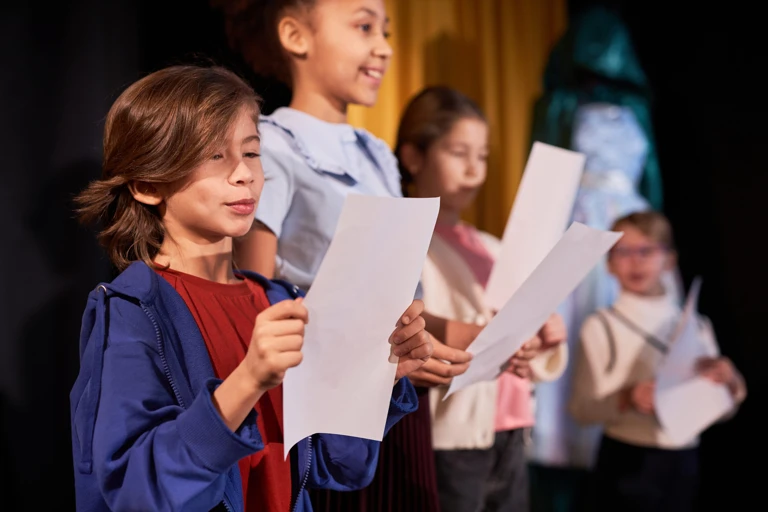
Through theatre, children expand their vocabulary, improve their pronunciation and gain greater confidence in using English. They learn by doing, as part of a lively, creative and shared experience.
Theatre also helps to develop important transferable skills: communication, listening, collaboration, flexibility, managing emotions and the ability to speak in front of others.
For us, it is a place for growth and building relationships, where every child can express their individuality and feel part of the group.
Frequently asked questions
The final goal is to nurture not just a competent student, but a wise, independent, and self-aware individual capable of acting responsibly in the global community.
The shared educational model is based on sound pedagogical foundations that follow the child’s growth, revisiting and deepening experiences over time so they transform into real-world skills.
Start your journey with us
Come and discover Peter Pan/EPS: book a visit or request information. We look forward to seeing you!